


At midday, one terrace can be unusable while a nearby seat remains comfortable. Shade, reflected heat and moving air create that difference. Good Dubai landscape design reads each microclimate instead of treating the plot uniformly.
Successful Dubai garden design begins with use: who sits outside, when and for how long? Breakfast, play and evening dining each need different conditions. Sun, privacy and villa access affect every choice. Garden landscaping then translates those routines into shade, planting and circulation.
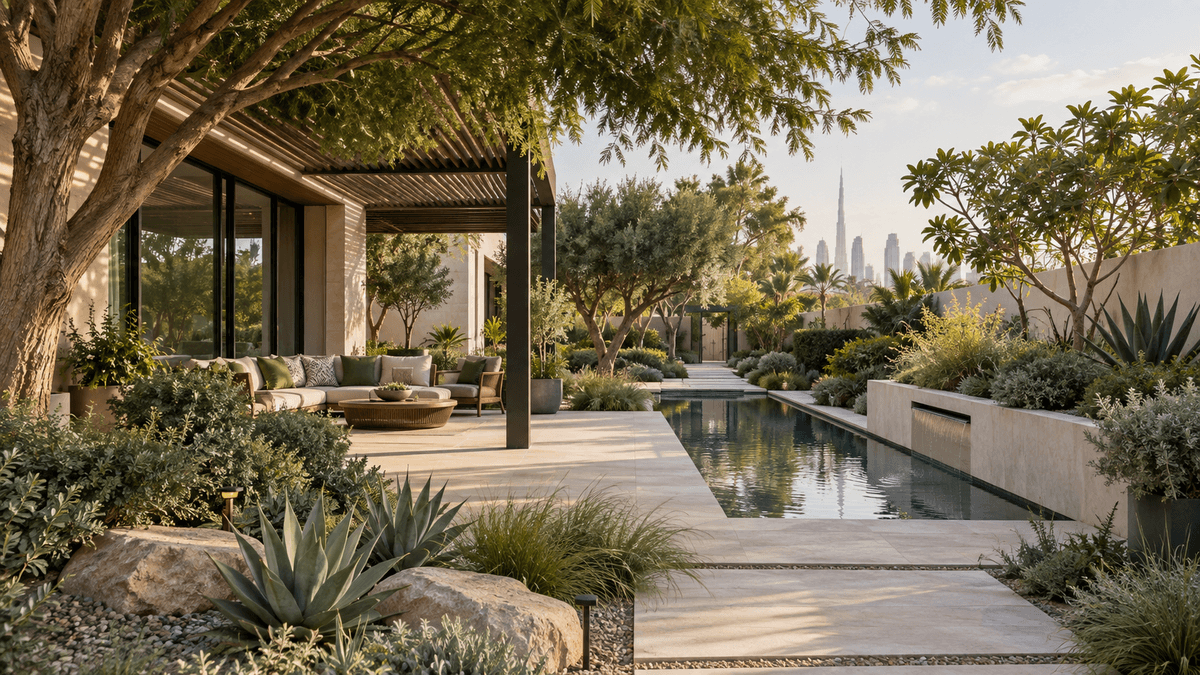
Dubai landscape design begins with daily routines
Before fixing the layout, Dubai landscape design should map seasonal sun and reflected heat. It should also show breezes, privacy lines, service access and existing routes. Those routes connect indoor rooms with the garden.
Visit the plot in the morning, late afternoon and after dark when possible. The largest open area may not be the best place for dining. A narrow side garden can make a pleasant morning courtyard. A pool positioned only for symmetry may conflict with shade, wind or falling leaves.
Each plot contains several microclimates. Boundary walls can block moving air. Large glazed façades can reflect heat towards seating. Dark paving and artificial turf may raise local surface temperatures. Observing these effects leads to better decisions than arranging features on a plan alone.
Build the plan around reliable shade
Reliable shade establishes the main outdoor rooms in Dubai landscape design. A solid canopy offers dependable protection. An open pergola needs the right slat direction or an adjustable layer. Trees provide shade and evaporative cooling. They need time and enough soil volume to mature.
Air still needs to move beneath the cover. A low roof with closed sides can trap warm air. Higher canopies, open edges and well-positioned fans may improve comfort. Outdoor air conditioning units and kitchen extract should discharge away from occupied areas.
A layered approach combines permanent and seasonal shade. An architectural canopy can protect the main terrace. Trees or screens can then intercept lower-angle sun. Retractable elements allow more light during the cooler months.
Test hardscape in sun before approving it
Hardscape decisions make Dubai landscape design cooler, safer and easier to maintain. Paving colour affects surface temperature, but reflectance is only part of the decision. Dubai Municipality’s Al Sa’fat system covers solar reflectance and shaded hardscape. Its requirements apply to new buildings. Solar reflectance index, or SRI, measures how a surface manages solar heat. It considers both heat rejection and release.
A higher-SRI material may remain cooler. The palest option can still create uncomfortable glare beside water or light-coloured walls. Texture, joint width and surface treatment also affect how paving feels and performs. Test full-size samples at midday and late afternoon.
Pool surrounds, steps and play areas need reliable slip resistance when wet. Barefoot routes should avoid surfaces that become painfully hot. Vehicle crossings need a suitable build-up without awkward level changes or drainage traps.
Use planting to cool useful spaces
Planting gives Dubai landscape design much of its cooling value. Select plants for the site’s light, wind, soil and water conditions. Al Sa’fat requires indigenous or climate-adapted species across 25 per cent of planted areas. This provision applies to new buildings. Its design principle remains useful during garden renovation.
Trees can shade seating and west-facing walls. Shrubs can improve privacy and reduce reflected heat. Groundcover protects exposed soil. These layers usually perform better than isolated ornamental plants surrounded by stone or bare mulch.
Group species with similar water needs. Use lawn for a real purpose, such as play. Avoid treating it as the default finish. Check mature canopy and root spread against pools, walls, services and paving. The plant delivered on day one is not its final size.
Give irrigation the same attention as paving
Irrigation protects Dubai landscape design long after handover. Coordinate it with the landscape and hardscape design from the start. Divide plants into hydrozones by grouping species with similar water demand. Specify pressure, filtration and emitters for each zone, then keep valves accessible.
For new buildings, Al Sa’fat sets a water requirement for exterior landscaping. Non-potable water can meet that demand. Drip or subsoil irrigation offers another compliant route. DEWA also promotes smart irrigation in its Ideal Home guidance.
Drip irrigation limits overspray and places water close to roots. It still needs inspection. A blocked emitter can stress one plant without producing an obvious leak. A broken line may remain hidden until consumption rises. Moisture sensors, separate zones and water-use alerts help make those faults visible.
Drainage belongs in the same drawing set. Overwatering will not correct poor soil preparation. Planter depth, soil composition and outlets should be resolved before paving and planting restrict access.
Position the pool for the garden around it
Pool placement within Dubai landscape design affects more than symmetry. A pool is also a piece of engineering. Its position affects circulation, privacy, reflected light and the view from inside. The deck, shade and seating determine whether the area works when nobody is swimming.
Plant selection nearby should consider leaves, roots and maintenance access. A swimming pool plant room needs ventilation, drainage and a direct service route. Pumps and filters should be reachable without carrying equipment through formal living rooms.
Pool size should reflect real use. More water surface means more cleaning and evaporation. In many gardens, a generous shaded edge offers greater comfort. Extra pool width may add less daily value.
Use light to guide rather than flood
After sunset, lighting keeps Dubai landscape design legible and comfortable. It should reveal routes, steps and social areas without flattening the garden. Excessive contrast makes darker zones harder to read. Exposed fittings can also create glare beside water or pale walls.
Give each lighting layer a clear job. Low-level fittings can guide paths. Controlled accents can reveal selected planting or textured walls. Task lighting belongs near cooking and dining areas. Separate circuits allow the garden to respond to different uses without switching everything on.
Fixtures need suitable ingress protection and access for replacement. Coordinate cable routes with irrigation and drainage before the hardscape is installed.
Plan for heat water and material movement
Outdoor materials expand, contract, fade and weather. Stone, porcelain, timber, composite decking, render and metal need compatible substrates and fixings. Movement joints should continue through the build-up rather than stop beneath the visible finish.
Drainage falls must direct water away from doors, kitchens and electrical equipment. Thresholds should remain accessible and weather resistant. Give extra attention to planters, pool edges and wall bases. These junctions bring water against finished materials.
A small mock-up can test paving, grout, lighting and drainage together. Correct one corner before installation. That is easier than repeating a weak detail across the plot.
Walk the design before signing it off
Read the plan as a series of real journeys. Walk from the kitchen to the dining table carrying a tray. Follow the barefoot route from the pool to the villa. Check how a maintenance technician reaches irrigation valves, lights and pool equipment. Then consider the same routes in summer sun and after dark.
This review often finds problems that a feature list misses. A seat positioned for the best view may sit in glare. A concealed plant room may require an awkward service route. A tree may cast useful shade but shed leaves directly over the pool.
Maintenance should match the household. A frequently vacant villa needs irrigation alerts and accessible equipment. Its planting should tolerate an occasional missed visit. DEWA’s Smart Living service highlights unusual water consumption. That pattern may indicate a leak.
Outdoor comfort comes from placement
Dubai landscape design works best when shade, planting, water and access match daily life. A compact scheme can outperform a feature-heavy plan. Each element must suit its microclimate. Villa landscaping in Dubai also needs a clear maintenance plan.